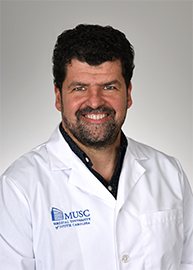
John O'Bryan, Ph.D.
Developing novel approaches to inhibit oncogenic RAS
Research Interest
The focus of my research is on defining new vulnerabilities in the RAS oncoprotein. Although RAS has been studied for more than 40 years, few targeted therapeutics are available against mutant RAS. While great strides have been made in recent years in developing anti-RAS therapeutics, leading compounds target only a single oncogenic mutant. My laboratory has discovered new vulnerabilities in RAS that can be targeted for therapeutic inhibition. I collaboration with Dr. Shohei Koide, who developed Monobody technology, we recently described the NS1 Monobody, which targets the 4-5 interface of RAS to inhibit RAS dimerization/ nanoclustering thereby blocking RAS signaling and cellular transformation. We have extended these findings through development of additional RAS-inhibitory. Our work has been published in Nature Chemical Biology, Small GTPases, Oncogene, Cell Reports, and PNAS. In addition, I have authored several recent reviews on the pharmacological targeting of RAS. I have successfully managed a research group consisting of high school students, undergraduates, graduate students, postdoctoral fellows, technicians, staff scientists, and Research Assistant Professors. In addition, I serve on several grant review panels and have provided consulting advice for a number of groups regarding therapeutic targeting of RAS. As Contact PI on a MPI R01, I have managed a multidisciplinary team involving members of my laboratory along with the laboratory of Dr. Shohei Koide. Dr. Koide and I have established a highly productive collaboration for >10 years using Monobody technology to provide a deeper understanding of RAS biochemistry and approaches to therapeutically inhibit oncogenic RAS in vivo. Our studies have provided unprecedented insights into RAS biochemistry. Highlights of our work thus far include: 1. development of the NS1 Monobody, which provided the first experimental reagent to interfere with RAS nanoclustering demonstrating the importance of this process in the oncogenic activity of RAS; 2. development of 12VC1 Monobody, which selectively inhibits KRASG12V and KRASG12C providing the first non-covalent approach to inhibit specific oncogenic mutants in vivo; and 3. development of R15 Monobody, which selectively binds nucleotide-free (apo) RAS demonstrating the potential for therapeutically inhibiting oncogenic RAS function through targeting the apo RAS. These studies have provided important insights into RAS function, revealed new approaches to inhibit RAS, and provided important experimental tools for the larger RAS research community.