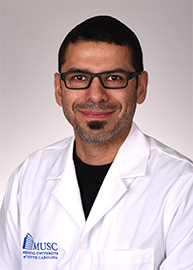
Jorge Munera, Ph.D.
Modeling the colorectal tumor microenvironment using human pluripotent stem cell derived colonic organoids
Research Interest
My goal is to understand the role of epithelial-mesenchymal interactions during colon development, homeostasis, and pathologies such as ulcerative colitis and colorectal cancer. My research lab at MUSC draws on my unique background in fetal intestinal development from gastrulation through postnatal development as well as experience with murine models of colitis associated cancer. During my postdoc, I developed a method for generating human colonic organoids (HCOs) from human pluripotent stem cells. This system encompasses not only epithelial cell types but also mesenchymal cell types. Using this in vitro system and complementary mouse models I will pursue several projects with translational applications: 1. To establish complex models of colonic disease using patient derived induced pluripotent stem cells (IPSCs) or CRISPR-Cas9 edited IPSCs differentiated into HCOs; 2. To determine how epithelial-mesenchymal signaling is disrupted in these in vitro models and in human patient biopsies; and 3. To identify molecular targets for therapeutic intervention that can ameliorate disruptions in epithelial-mesenchymal signaling. Compared to human colonoids (epithelial colonic organoids), HCOs are derived from human pluripotent stem cells and thus, they can be used to study colonic development. In addition, HCOs have a co-developing mesenchyme which will be useful for studying stromal contributions to colonic diseases such as Juvenile Polyposis Syndrome, Very Early Onset Inflammatory Bowel Disease (VEO-IBD) and Colorectal Cancer.